Japan is one of the world’s leading trading nations, with a total trade value in 2023 of approximately 100.8 trillion yen in exports and approximately 110.3 trillion yen in imports, both of which increased significantly compared to the previous year. (Source: Ministry of Finance Trade Statistics)
Key export items include automobiles, semiconductors and electronic components, and steel.
The top export destinations are China and the United States, with exports to the Asia region showing an increasing trend.
On the other hand, in imports, energy resources such as crude oil and liquefied natural gas (LNG) are the main items, with imports primarily coming from the Middle East and Australia.
Thus, Japan’s trade spans a wide range of items and regions, playing an important role in the global economy.
In recent years, with changes in the global economic environment and technological innovations, the forms of trade have also diversified.
For example, new trading forms such as OEM (Original Equipment Manufacturer) and subcontracted processing trade are on the rise, facilitated by collaboration between companies.
Understanding and utilizing these new trade forms is crucial for maintaining and enhancing international competitiveness.
This article will explain in detail the seven types of trade: direct trade, indirect trade, intermediary trade, parallel imports, OEM imports, development imports, and subcontracted processing trade, exploring their characteristics, advantages, and disadvantages.
We hope this knowledge will be helpful in your business strategy.
1. Direct Trade
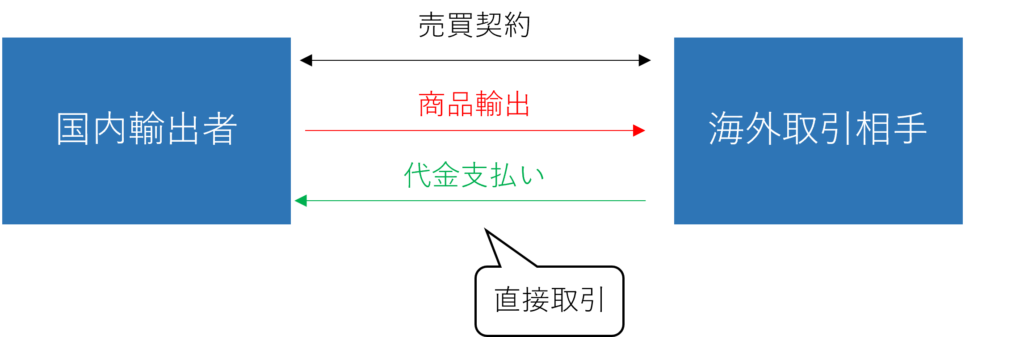
Direct trade refers to a form of trade where the exporter and importer conduct business directly with overseas trading partners without going through trading companies or distributors.
The advantages include saving on fees by bypassing intermediaries such as trading companies and making it easier to convey your company’s intentions by negotiating directly with the trading partner.
However, the disadvantages include the need to take on all the risks associated with trade (such as collecting payments and shouldering the responsibility of international transportation) and the need to manage delivery schedules and other logistics in-house.
The most common service we handle is related to direct trade. We assist in reducing the burden on our clients and minimizing risks.
2. Indirect Trade
Indirect trade refers to a trade form in which exports and imports are conducted through intermediaries such as trading companies or distributors.
The main benefit of this model is that the intermediary takes on the complex procedures and risks associated with trade transactions, such as payment collection, international shipping, and compliance with regulations. This significantly reduces the burden on exporters and importers. Additionally, by leveraging the expertise and extensive network of trading companies, efficient and secure transactions become possible.
On the other hand, in indirect trade, the trading company often leads the entire transaction, which may limit the flexibility of the exporter. Specifically, pricing and transaction terms are frequently determined by the intermediary, making it harder to fully reflect the exporter’s preferences or strategies. Furthermore, the fees and margins paid to the trading company or distributor can contribute to increased costs.
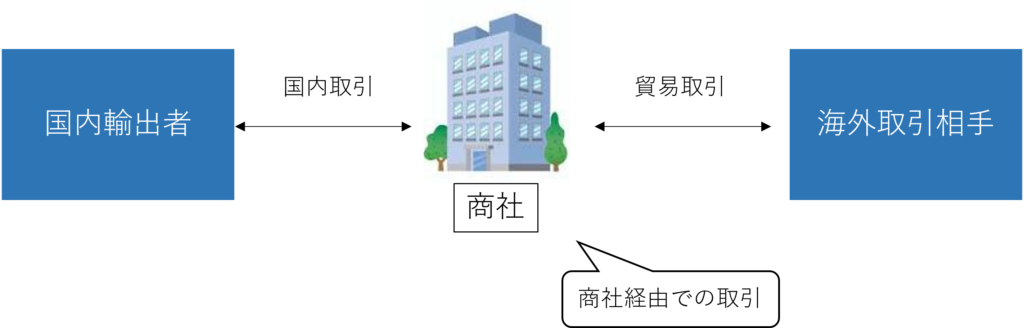
Differences between direct and indirect trade
Direct and indirect trade each have distinct characteristics. In direct trade, the exporter takes the lead and enjoys flexibility in negotiations, while in indirect trade, the trading company takes a central role, providing the benefit of risk reduction, though the exporter’s freedom may be constrained.
At our company, we focus on supporting direct trade and provide flexible support tailored to our customers’ needs and strategies. We also offer consultation on indirect trade and assist in selecting the optimal trade structure.
3. Trilateral trade (intermediary trade)
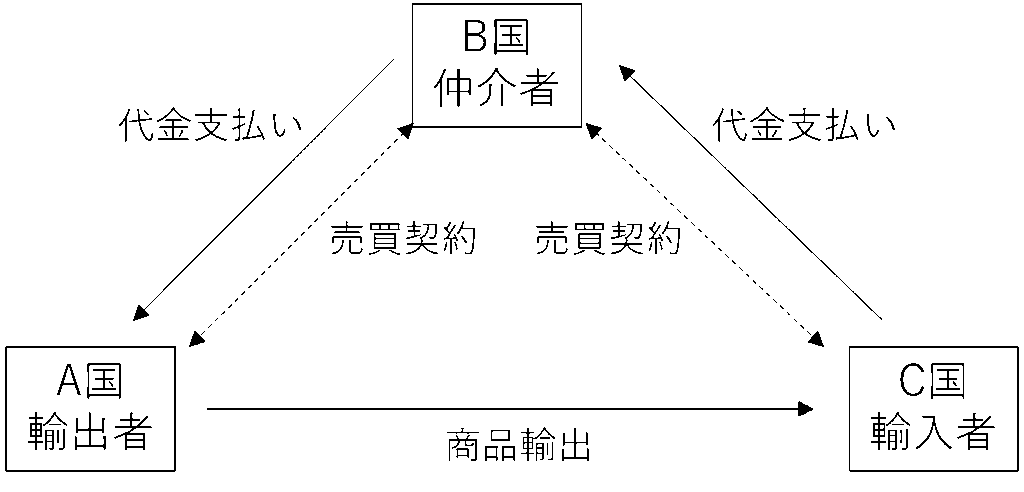
Triangular trade (also known as intermediary trade) refers to a trade structure where a third-country intermediary or company acts as a go-between for the exporter and the importer.
The advantages of this structure include the fact that the third-country intermediary manages and coordinates the entire transaction, reducing the burden on both the exporter and importer for direct negotiations and procedures. Additionally, if the intermediary has a broad network and valuable information, it can facilitate smoother transactions and open up new market opportunities.
On the other hand, in triangular trade, the intermediary often takes control of the entire transaction, which may limit the flexibility of the exporter and importer. In particular, during price negotiations and the setting of transaction terms, the interests (margins) of the intermediary may take priority, potentially making it difficult to reflect the intentions of the exporter or importer and possibly resulting in lower profit margins compared to direct trade.
Flow of money, documents, and goods in trilateral trade
① Flow of money
- The importer pays the payment for the goods to the intermediary in the third country.
- The intermediary pays the export price to the exporter and secures the margin as the difference.
- This system ensures that the exporter and importer do not directly exchange funds, and all transactions are conducted through the intermediary.
②Document flow
- The exporter submits the necessary documents, such as the invoice, packing list, and certificate of origin, to the intermediary.
- The intermediary carries out the necessary customs procedures in the importing country based on these documents and then delivers the goods to the importer.
- The intermediary takes the lead in the exchange of documents, and both the exporter and the importer share document information indirectly.
③Flow of goods
- The exporter submits the necessary documents, such as the invoice, packing list, and certificate of origin, to the intermediary.
- The goods themselves often reach the importer directly, but since the intermediary controls the logistics process between the exporter and importer, the goods may pass through the intermediary’s warehouse.
4. Parallel imports
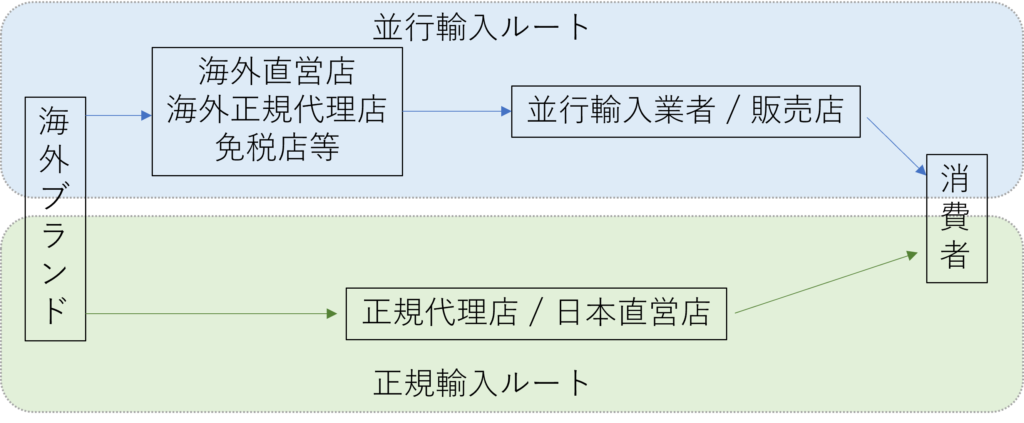
Parallel imports refer to the importation of products, such as overseas brand goods, by parallel importers or individuals without going through the authorized distributors who hold exclusive import rights. While this might seem like an illegal activity at first glance, it is a legal practice as long as the products are imported into the country through proper customs procedures.
The advantages of parallel imports include being able to purchase goods at lower prices and gaining access to products that are not sold in Japan. However, there are disadvantages such as not receiving the same warranties as with genuine products, and the possibility of counterfeit goods being mixed in. Therefore, it is important to choose a reliable retailer when making purchases.
5. OEM Import
OEM trade refers to the import and sale of products under one’s own brand, where the products are designed and manufactured by another company. “OEM” stands for “Original Equipment Manufacturer.”
Specifically, in this form of trade, the client company (the brand owner/importer) requests the contracted manufacturer/exporter to produce an existing product under the client’s brand name. After the product is completed, the client imports it and sells it to consumers.
The major advantage of OEM trade is that there is no need to own manufacturing facilities, which significantly reduces production costs. However, by outsourcing manufacturing, the client becomes more dependent on the contractor, which introduces risks in quality control and information management. Therefore, selecting a reliable partner is extremely important.
It is also worth noting that if the client requests the contractor to design and manufacture a completely new product from scratch, this is called ODM (Original Design Manufacturer), which is distinct from OEM.

6. Development and Import
Development import refers to a trade model where the client (importer) specifies their requirements to an overseas contractor, who then manufactures the product based on those specifications. The imported products are then sold by the client. This concept is similar to OEM trade, but with a key difference: while in OEM the client requests the manufacturer to produce products based on the manufacturer’s existing product line, in development import, the client provides the design and specifications, allowing for a product that is more tailored to the client’s needs.
The key advantage of development import is the higher degree of freedom in design and cost control, as the client has greater control over the process. However, this also means that the client must share their knowledge and expertise with the manufacturer, so a reliable partnership is even more critical than in OEM trade.
Additionally, since the contractor is not involved in the design, any issues or problems that arise may take longer to resolve, making effective collaboration between the client and contractor essential.
The difference between development import and ODM (Original Design Manufacturer), as discussed in the OEM section, is that in development import, the client handles the design work, while in ODM, the contractor handles the design process.

7.Commissioned processing trade
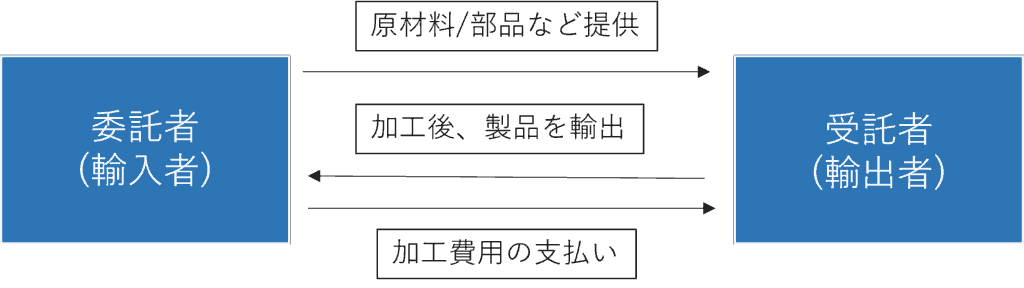
Contract manufacturing trade refers to a trade model where the client (the exporter) provides raw materials or components to an overseas contractor (such as a processing company), who then processes or assembles the materials according to the client’s instructions. The finished products are then exported back to the client (re-imported from the client’s perspective).
The advantages of this model include the ability to reduce manufacturing costs by utilizing low-labor-cost countries or regions as production bases. Additionally, if processing is done in bonded areas of the contractor’s country, duties and taxes can be reduced, and logistical costs may also be streamlined.
However, there are several potential disadvantages. For example, it can be difficult to directly monitor production conditions in the foreign country, which may lead to challenges in quality control. There is also the risk of delays in delivery due to the contractor’s production capacity or external factors. Furthermore, since design and technical information are shared with the contractor, there is a concern about the potential for knowledge leakage or the creation of counterfeit products. Additionally, the risk of increased costs due to exchange rate fluctuations in the transaction currency cannot be overlooked.
To mitigate these disadvantages, it is crucial to select reliable partners and create an environment where the client and contractor can collaborate effectively.